


Lynton Dent
Lynton Dent is the Business Development Manager for Rapid 3D. Rapid 3D is a reseller for EOS, Markforged, Artek, 3D Systems and HP in South Africa. In this interview, Lynton discusses business consultancy in 3D printing.
What do you do in 3D Printing?
My team has worked with a range of sectors, – Aerospace, Automotive, Industry, Lifestyle, Medical and Rapid prototyping are the most prevalent sectors within which we have facilitated the development of AM. Our focus is primarily on AM within Industrial applications.
The State of Metal 3D Printing
We range from consulting for a micro part level of material, technology, and design guidance to macro levels encapsulating the complete application or business case. Working with a transformative technology that plays a key role in our client’s competitive advantage strategies is what we do.
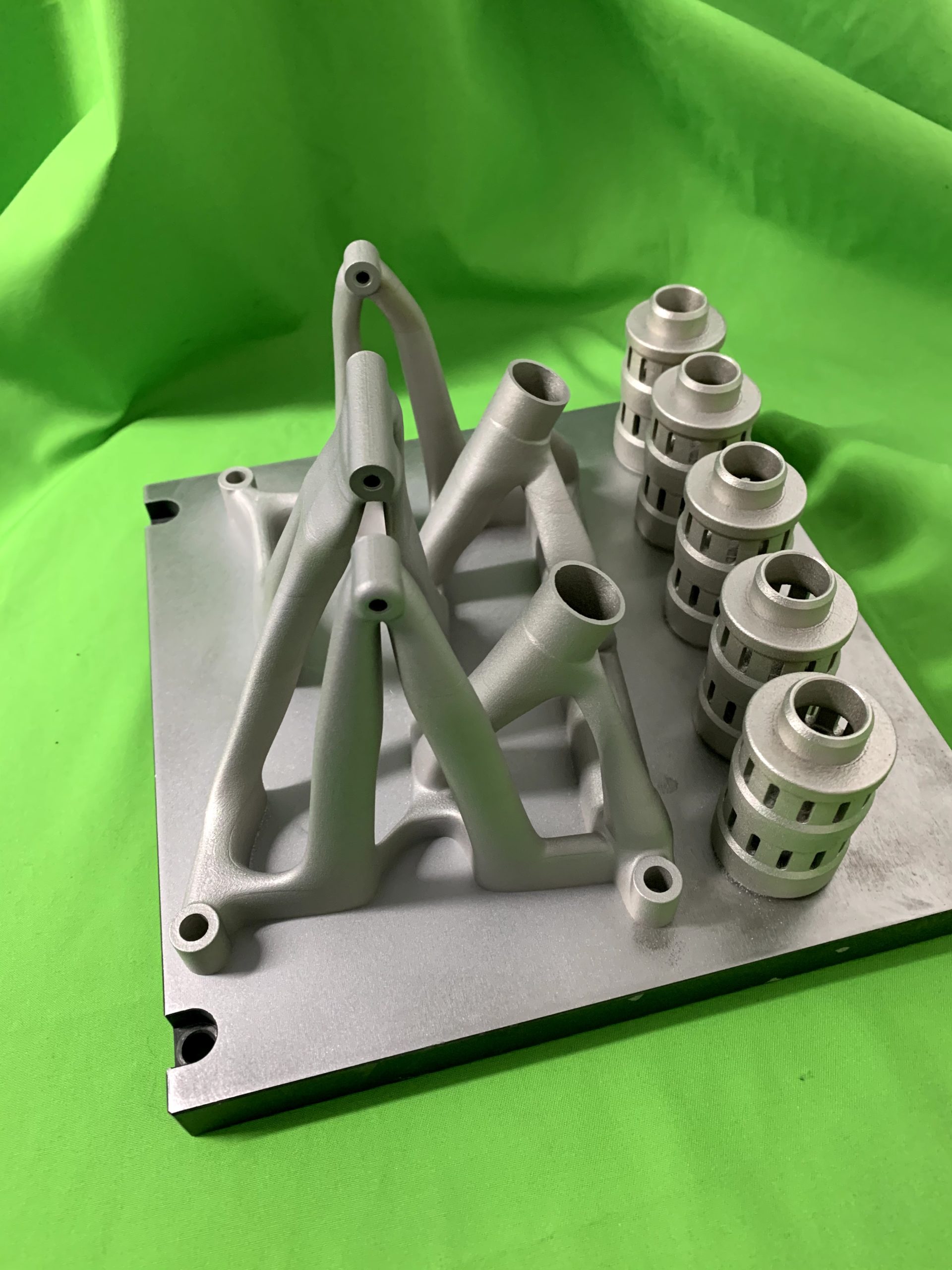
Metal 3D printed jig
Technical Challenges and Solutions
What is your view of 3D printing business consulting in Africa?
When new ideas and technologies are developed, the world looks on with bated breath. The bewilderment, inspiration, and potential that AM can bring is quickly drowned out by skepticism.
Material Properties and Performance
Conventional business consulting commercializes the professional service of advising. With AM consulting, the model becomes more hybrid, as it incorporates training, guiding, prototyping and in most cases a manufacturing partner in the early stages of business and application growth.
As a majority, this is not what we are seeing in Africa. We are seeing corporations and governments being “advised” to spend large budgets, on multiple duplicate machines of singular brand and technology. These machines are under-utilized and slowly becoming obsolete; with no connection to an application or viable business case. Sadly, these actions merely reinforce the skepticism around the technology.
Such behavior is not isolated to Africa – it is a trend seen around the world. There is a lot of noise, a lot of excitement and “hype” around AM technology. We are dealing with a technology that has no single one- size-fit-all. There is no infographic, recipe book or any other source of educational content that has all the answers. Unfortunately, no single manual that can be taken and applied to your company’s individual needs. This will cause a hard felt lesson for leaders seeking a “bolt on solution” to serve as the strategic AM strategy.
And what basic steps or considerations would you give to anyone wishing to establish a 3D Printing consultancy business?
This is an important question. 3D Printing consulting has the potential to empower African industries. So I would like to rephrase the question.
Industrial Applications and Use Cases
For an AM consulting business to have the ability to add true value to the customer’s business, they need to demonstrate the ability to lead the customer on the journey of adoption, integration, and acceptance of this trans-formative technologies.
For this, a client needs access to a Team with business savvy, with a proven record of interpreting, unpacking, and solving technical engineering-related problems. AM solutions frequently encapsulate multiple disciplines. Supply chain, purchasing, maintenance philosophies, all have to be encapsulated in the team’s understanding for the AM solution to be truly effective and truly add value. Lastly and most critically, access to equipment and know-how. Knowledge of the equipment, and experience using it. Without access to equipment, the business consultant is unable to effectively guide the AM journey.
Do you see 3D Printing business consultancy growing in Africa and will African companies embrace these services?
As more and more (sectors/ industries/companies) adopt AM technology the more 3D business consulting and the role of the so-called “Business Consulting Salesman” will grow. I don’t believe this is unique to AM technology and in any complex tech-business space there will always be an opportunity.
Comparing Metal AM to Traditional Manufacturing
Rapid 3D
AM technology has established itself as a technology that can truly unlock “the third wave” solutions and drive progress. I believe a key question that AM consultants should ask is what happens if we don’t help facilitate the development of this transformative technology? If we continue to put sales before enabling them and if we will continue to have factories of underutilized, obsolete equipment? We are missing the opportunity to leverage AM technology to grow a multitude of sectors. If we don’t facilitate this development, we will be left behind the developed world.
Future Developments in Metal Additive Manufacturing
The post Interview with Lynton Dent on 3D Printing Business Consulting in Africa appeared first on 3DPrint.com | The Voice of 3D Printing / Additive Manufacturing.
Related Articles
Frequently Asked Questions
What is metal 3D printing?
Metal 3D printing (additive manufacturing) builds metal parts layer by layer using techniques like laser powder bed fusion, directed energy deposition, and binder jetting. It enables complex geometries impossible with traditional manufacturing while reducing material waste significantly.
How strong are 3D printed metal parts?
3D printed metal parts can achieve mechanical properties comparable to traditionally manufactured metals. Tensile strength and fatigue resistance depend on the process and post-processing, but many meet or exceed ASTM standards for wrought materials.
What are the main metal 3D printing technologies?
The primary technologies include Laser Powder Bed Fusion (LPBF), Electron Beam Melting (EBM), Directed Energy Deposition (DED), Binder Jetting, and Metal FDM (with bound filaments). Each has different strengths in terms of resolution, speed, and material options.
📌 Related Articles
- The Current State of Metal 3D Printing in 2020
- Best 3D Printer Upgrades That Actually Improve Print Quality: Complete 2026 Guide
- Best Budget 3D Printer Upgrades That Actually Improve Print Quality: Belts, Springs, Hotends & More
- 3D Printing News: Multi-Material Breakthrough and Aerospace Market Boom
- 3D Printing Tungsten Carbide: How Hot-Wire Laser Technology Creates Metal Harder Than Steel