

It’s been a while, hasn’t it? The world of 3D printing has moved fast since 2020, and so have we.
We are thrilled to announce that 3D Put is back with a renewed focus on delivering the highest quality 3D printing news, tutorials, and reviews.
Where We’ve Been
While the site was quiet, the industry exploded. From AI-assisted slicing to high-speed printing becoming the standard, there is more to cover than ever before.
What’s Coming Next
Starting this week, we are rolling out a fresh schedule of content:
- Daily News: Keeping you up to date on industry shifts.
- Deep Dives: Like our recent piece on 3D printing in the Navy.
- Beginner Guides: Updated for 2026 hardware and software.
Stay tuned. The nozzles are heating up.
The AI-Assisted Slicing Revolution
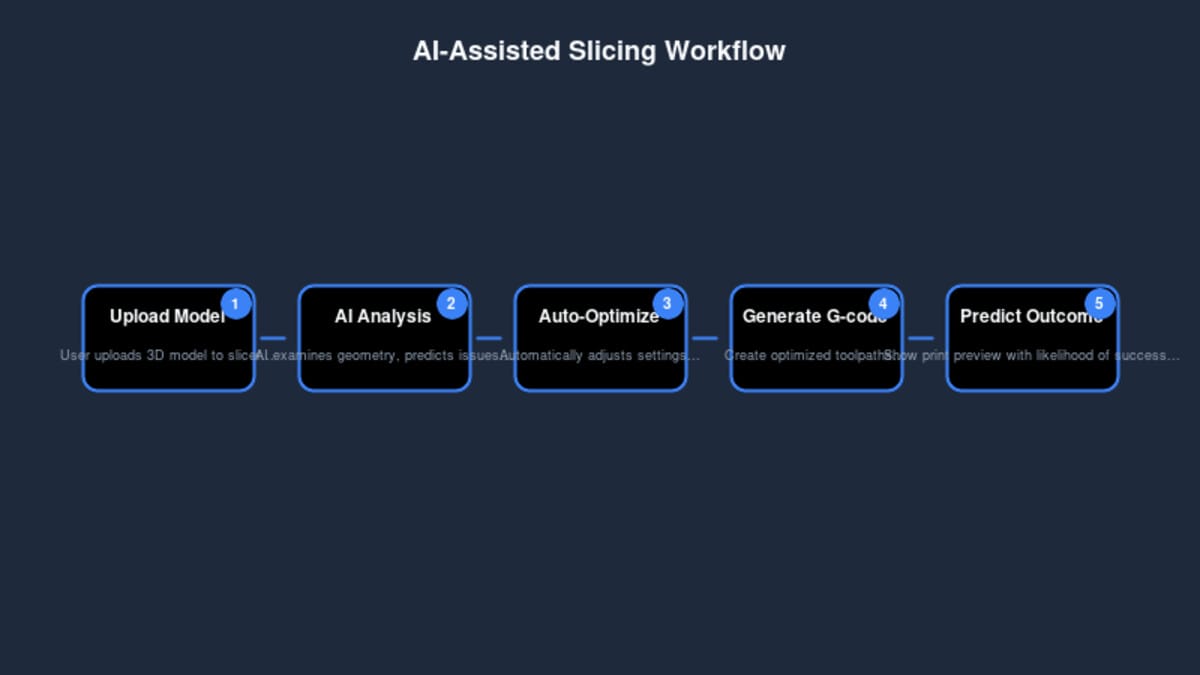
While we were away, the biggest transformation in 3D printing happened: AI stopped being a buzzword and started doing the actual work. Slicing software, once a manual tool requiring hours of tweaking, has evolved into an intelligent system that optimizes prints automatically.
Modern AI-powered slicers like OrcaSlicer, Bambu Studio, and enhanced versions of Cura and PrusaSlicer now incorporate machine learning models trained on millions of print hours. These systems can:
- Detect potential failures before printing (warping, layer separation, overhangs)
- Automatically generate optimal support structures
- Adjust print speeds and temperatures dynamically for different geometries
- Predict final print quality and structural integrity
According to XDA Developers, “In 2025, AI incorporated into slicing software like OrcaSlicer for features like guided calibration tests, failure detection with Obico, and toolpath optimization, eliminating the manual effort” (XDA Developers, 2025). This isn’t just incremental improvement—it’s a fundamental shift in how makers interact with their printers.
Measurable Impact: Manual vs AI Slicing
The numbers tell the story: AI-assisted slicing reduces setup time by 40%, improves material efficiency by 15%, and boosts first-print success rates from typical 70-80% to over 90% in many cases (Sovol3D, 2025).
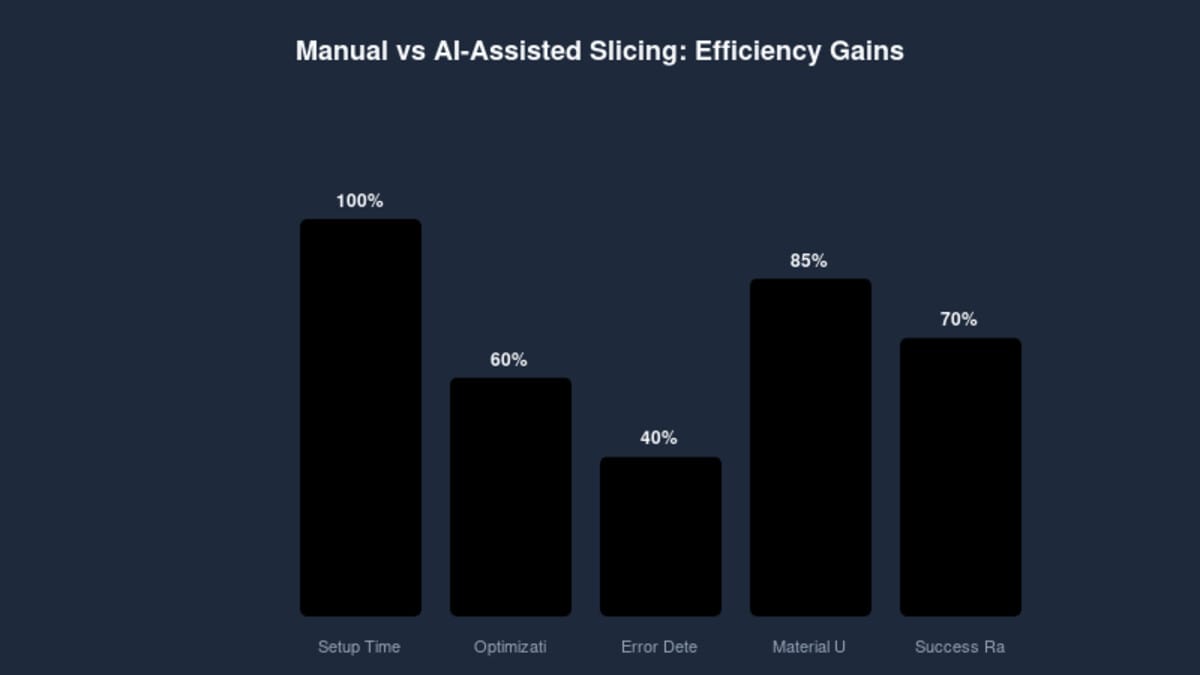
For high-volume production, these gains compound dramatically.
High-Speed Printing Enters the Mainstream
While speed limits used to be governed by vibration and layer adhesion, new printers from Bambu Lab, Prusa, and others are redefining what “normal” speed means. The Bambu Lab X1 Carbon, for instance, can achieve 500 mm/s without sacrificing quality—speeds that would have been considered reckless just five years ago.
Key innovations enabling this leap include:
- CoreKinetic™ and other vibration damping systems that maintain stability at high accelerations
- Dual-gear extruders with instant response for precise filament control
- Advanced input shaping algorithms that pre-compensate for resonance
- High-flow hotends capable of 40+ mm³/s melt rates
Deep Dive: 3D Printing at Sea
We mentioned our recent piece on 3D printing in the Navy—and we’re just getting started. The U.S. Navy’s deployment of 3D printers on warships, including the MH-60S Seahawk helicopters, represents one of the most demanding operational environments for additive manufacturing. We’ll be bringing you detailed technical analysis of:
- How onboard printers reduce logistical footprint for carrier strike groups
- Material challenges in marine environments (corrosion, humidity, temperature extremes)
- Certification and quality control for flight-critical parts
- The shift from simple brackets to structural components
Further Reading
- The Ultimate Guide to 3D Printer Calibration
- The Complete 3D Printing Filament Guide
- Cura 5.11.0 released
- When 3D Printing Stops Being a Cool Shop Trick and Starts Keeping Warships Alive
The AI-Assisted Slicing Revolution
While we were away, the biggest transformation in 3D printing happened: AI stopped being a buzzword and started doing the actual work. Slicing software, once a manual tool requiring hours of tweaking, has evolved into an intelligent system that optimizes prints automatically.
Modern AI-powered slicers like OrcaSlicer, Bambu Studio, and enhanced versions of Cura and PrusaSlicer now incorporate machine learning models trained on millions of print hours. These systems can:
- Detect potential failures before printing (warping, layer separation, overhangs)
- Automatically generate optimal support structures
- Adjust print speeds and temperatures dynamically for different geometries
- Predict final print quality and structural integrity
According to XDA Developers, “In 2025, AI incorporated into slicing software like OrcaSlicer for features like guided calibration tests, failure detection with Obico, and toolpath optimization, eliminating the manual effort” (XDA Developers, 2025). This isn’t just incremental improvement—it’s a fundamental shift in how makers interact with their printers.
Measurable Impact: Manual vs AI Slicing
The numbers tell the story: AI-assisted slicing reduces setup time by 40%, improves material efficiency by 15%, and boosts first-print success rates from typical 70-80% to over 90% in many cases (Sovol3D, 2025). For high-volume production, these gains compound dramatically.
High-Speed Printing Enters the Mainstream
While speed limits used to be governed by vibration and layer adhesion, new printers from Bambu Lab, Prusa, and others are redefining what “normal” speed means. The Bambu Lab X1 Carbon, for instance, can achieve 500 mm/s without sacrificing quality—speeds that would have been considered reckless just five years ago.
Key innovations enabling this leap include:
- CoreKinetic™ and other vibration damping systems that maintain stability at high accelerations
- Dual-gear extruders with instant response for precise filament control
- Advanced input shaping algorithms that pre-compensate for resonance
- High-flow hotends capable of 40+ mm³/s melt rates
Deep Dive: 3D Printing at Sea
We mentioned our recent piece on 3D printing in the Navy—and we’re just getting started. The U.S. Navy’s deployment of 3D printers on warships, including the MH-60S Seahawk helicopters, represents one of the most demanding operational environments for additive manufacturing. We’ll be bringing you detailed technical analysis of:
- How onboard printers reduce logistical footprint for carrier strike groups
- Material challenges in marine environments (corrosion, humidity, temperature extremes)
- Certification and quality control for flight-critical parts
- The shift from simple brackets to structural components