
This April marks the 50th anniversary of Earth Day. With the COVID-19 pandemic, life has taken unprecedented turns, but acts of humanity, big and small, are shining through the fog. Whether it is global climate challenges or worldwide public health, these days are a sobering reminder that—regardless of nationality, industry, or any other categorization—we are all inextricably linked.
As a 3D printing industry veteran, this health crisis shows me that digital manufacturing has a transformational role to play: not just by 3D printing medical supplies right now, but in creating a more sustainable, more collaborative world for the long-term. This Earth Day, I’m resolute that three fundamental principles will continue to guide our work today and for decades to come:
Innovation to Benefit Humanity
We have always known that many technologies are catalysed by acute problems. In times of uncertainty and disruption, purpose is a stabilizing force. Technology has the ability to make life better for everyone, everywhere. Digital manufacturing can make production faster and increasingly responsive to the immediate needs of people in a particular place or time—as we’ve seen during this crisis. In fact, 80 percent of enterprises say 3D printing helps them innovate faster. It also circumvents broken supply chains and makes scalability more viable, even for small businesses. All of this is in service of people—the creators, the workforces and, of course, the customers who benefit from a cleaner, more collaborative way of manufacturing.
The Role of 3D Printing in Medicine
It Takes an Ecosystem
Our industry mobilized quickly around COVID-19, not only because of technology, but also because of partnerships. See also: Best 3D Printer Upgrades That Actually Improve Pri…. Within the first weeks of the virus spreading, HP produced more than 50,000 medical parts, like masks and face shields. Our partners amplified that effort with tens of thousands more. For example, SmileDirectClub repurposed one of the US’ largest 3D printing factories for production of face shields at scale —up to 10,000 a day—while its research and development team worked around the clock on innovative filtration masks. Our industry was able to share ideas and transform workflows in a matter of hours or days, not months or years.
While 3D printing requires a relearning process, from conceptualization, to design, to production, to distribution, this time of need has shown us why experts from every industry must rally behind its life-changing potential. For example, we are proud to participate with the World Economic Forum on its COVID-19 Action Plan. Businesses working together with government agencies, healthcare providers, and academic and research leaders around the world are proving to be a powerful ecosystem with a shared vision for saving lives and facilitating a more sustainable future—something that no single entity could have done alone.
Biocompatible Materials and Processes
Serve the Communities in Which We Live, Work, and Play
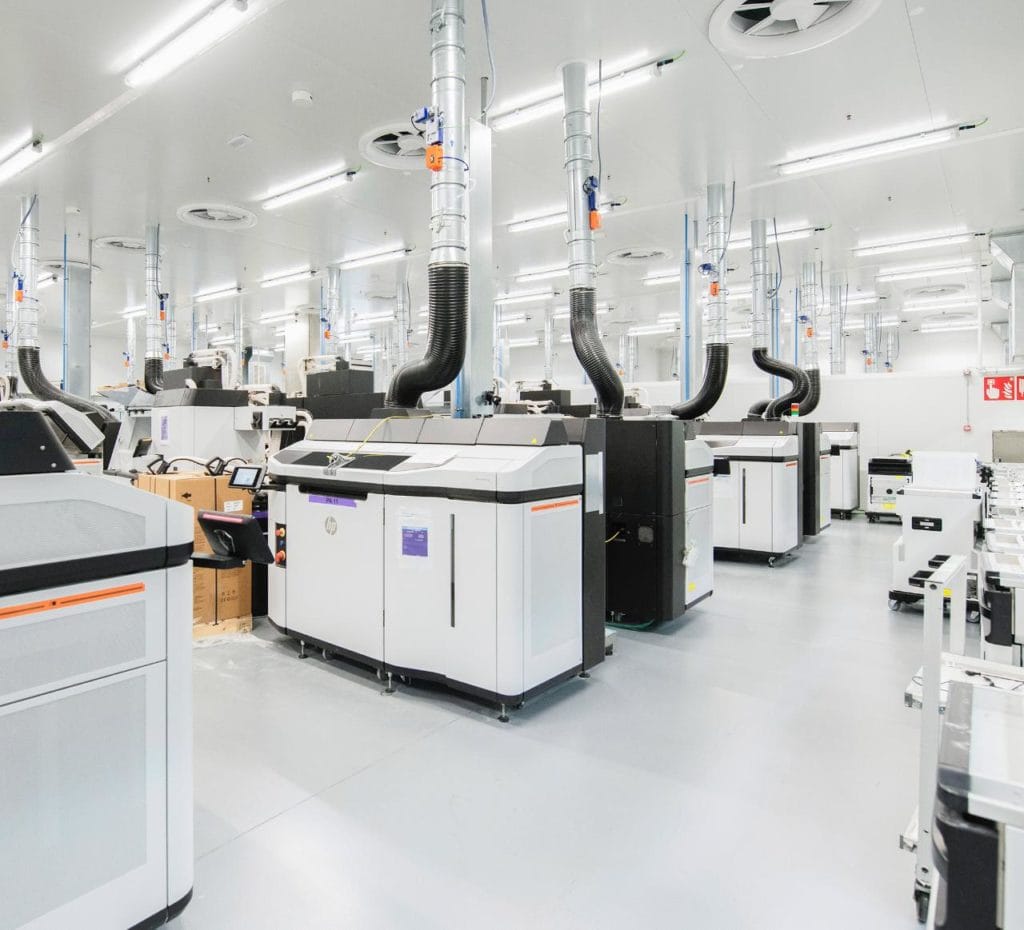
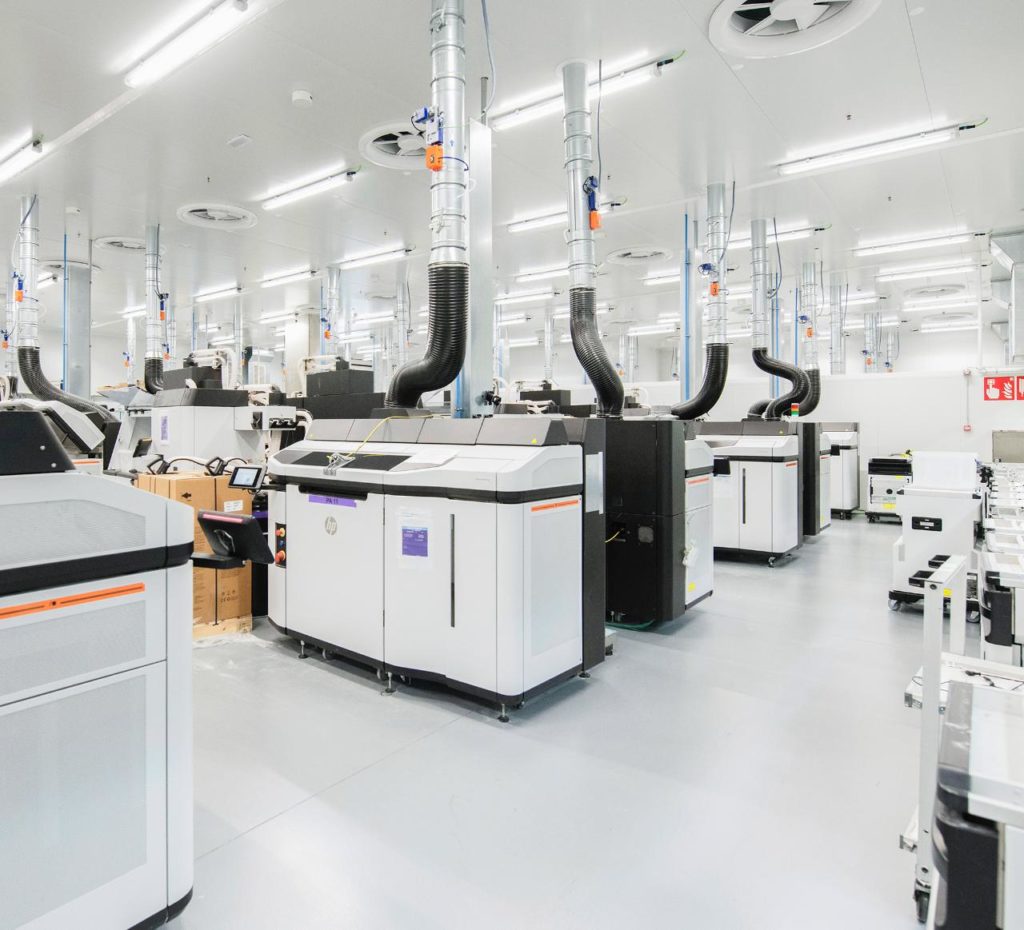
As we work to protect everyone’s wellbeing, we have to think big without overlooking what’s directly in front of us. In Barcelona, where I live and where HP opened a new 3D printing facility just last year, the pandemic has been devastating. That’s why we turned our 150,000-square-foot research-and-development center into full-scale production for face masks and shields, respirator parts, and more. Looking to our own backyards and investing in the communities where our employees work and live helps keep our innovations personal. If we aim to create solutions that serve our own people, progress will follow.
What we’ve learned from a half-century worth of Earth Days is that life on this planet requires the capacity and willingness to constantly meet new challenges with the spirit of resilience and reinvention. See also: Prusa Research Mini+ vs Prusa MK4: Full Specs Comp…. From electric vehicles to solar power, deploying technology in service of helping our planet is not new. We’ve proven we can do it. This Earth Day, our world is reeling, but we must continue to spark ingenuity and invention—and each other—once again.
The digital manufacturing industry has been a frontrunner in showing the world what’s possible when technology and human creativity are put to the test. But the work is not nearly done. While there is still a lot of uncertainty ahead, the technology we need to make purposeful change is helping us today.
Clinical Applications and Case Studies
By Ramon Pastor, Interim President of 3D Printing & Digital Manufacturing, HP Inc.
The post COVID-19: Making Our Planet a Better Place appeared first on 3DPrint.com | The Voice of 3D Printing / Additive Manufacturing.
Frequently Asked Questions
How is 3D printing used in medicine?
3D printing is used in medicine for surgical planning models, custom implants, bioprinting tissue scaffolds, drug delivery systems, dental aligners, and prosthetics. It enables patient-specific solutions that improve outcomes and reduce surgery time.
What materials are biocompatible for 3D printing?
Common biocompatible materials include PEEK, titanium alloys (Ti6Al4V), bio-ceramics (hydroxyapatite), medical-grade resins, PLA for temporary implants, and hydrogels for bioprinting. Material choice depends on the application and required mechanical properties.
Is 3D printed medical equipment FDA approved?
Yes, several 3D printed medical devices have FDA clearance, including orthopedic implants, dental restorations, and surgical guides. Each device must go through the appropriate regulatory pathway based on its risk classification.
📌 Related Articles
- Best 3D Printer Upgrades That Actually Improve Print Quality: Complete 2026 Guide
- Prusa Research Mini+ vs Prusa MK4: Full Specs Comparison & Buyer’s Guide
- ABS 3D Printing Settings Guide: Temperature, Enclosure, and Cooling for Strong Parts
- Bambu Lab P1S vs Bambu Lab P2S: Full Specs Comparison & Buyer’s Guide
- Best Budget 3D Printer Upgrades That Actually Improve Print Quality: Belts, Springs, Hotends & More